Amaou Strawberry
Strawberry
Best time: Jan–Feb (season runs mid-Dec to mid-May)
Amaou strawberries are grown only in Fukuoka Prefecture, so the only place to pick them is a farm in Fukuoka. Research by the prefecture's agricultural center found berries harvested in January to be the sweetest, so January and February are the months to aim for. This page covers what sets Amaou apart, how the taste changes through the season, how to reach Fukuoka farms, and 2026 prices and booking rules.
- Best timeJan–Feb (season runs mid-Dec to mid-May)
- Adult price (2026)60–90 min all-you-can-eat: ¥2,000–3,000
- BookingMostly reservation-only or reservation-first; book early for Jan–Feb weekends
- Without a car?Yes, at some farms — a 20-min walk from a bus stop, or 8–9 min by taxi from a station
- Main regionsFukuoka only (Kurume, Yame, Oki, Chikuzen and elsewhere)
What Amaou is: a Fukuoka-only variety
Amaou is the brand name of 'Fukuoka S6', a variety bred by the Fukuoka Agricultural Research Center. The name comes from the first sounds of the Japanese words for red, round, big and delicious (akai, marui, okii, umai). Because it is produced only in Fukuoka, the only farms where you can pick Amaou are in Fukuoka. The berries are deep red, some weigh over 40 g, and the flavor is rich, with sweetness and acidity in balance. You can find Amaou in supermarkets and fruit shops elsewhere in Japan from winter to spring, but only in Fukuoka can you eat them straight off the plant. For strawberry picking in general — seasons, how to pick and how regions compare — see our strawberry page.
When to go: January is best
In a 2005 study by the Fukuoka Agricultural Research Center, Amaou harvested in January had the highest sugar content, and January berries also scored best for taste. Farms open in mid- to late December and close around mid-May.
| Harvest month | How the berries taste (from the center's study) | Farm prices (examples from listed farms) |
|---|---|---|
| December | Most acidic; firm | Highest of the season |
| January | Highest sugar; best taste | Highest of the season |
| February | Acidity drops; berries get softer | Some farms cut prices from late February |
| March onward | Taste declines and varies more from berry to berry | Prices fall in steps from late March to May |
In short: go in January–February for size and flavor, or from late March for lower prices and more fruit.
Where to pick: farms in Fukuoka and how to get there
Most Fukuoka farms grow Amaou alongside other varieties in the same greenhouse, and you usually can't choose which variety to pick. If Amaou is what you want, ask about the varieties and what is ripe when you book.
Chikuzen (toward Asakura): For Lion Kajitsuen, take a bus from Nishitetsu Asakuragaido Station or JR Futsukaichi Station to the Ishibitsu stop, then walk about 20 minutes — or take a taxi from Nishitetsu Chikushi Station (about 9 minutes). It is 60 minutes all-you-can-eat (time-limited): for ages 12 and up, ¥2,600 from opening to April 6 and ¥2,300 from April 7 to May 9 (the 2025–26 price periods). Booking is required, but extra slots are often added in the afternoon the day before, so check again even if it looks full. Payment is by credit card.
Yame: At Pu-san's Strawberry Farm you can compare around eight varieties, including Amaou. In 2026 it opened from January 3 to May 6 with one flat price for 60 minutes: ¥2,500 for adults (junior-high age and up) and ¥2,000 for ages 4 and up. It is about 23 minutes by Horikawa Bus from JR Hainuzuka Station, with a change and few buses. On weekends and holidays it hands out numbered tickets and opens at 9:30, closing once the ripe berries run out. Cash only; closed Mondays.
Kurume: Fruitelier (Nakamura Orchard) is about 8 minutes by taxi from JR Minami-Kurume Station. Plants grow on two-tier raised beds with wide aisles, so you can go in with a wheelchair or stroller. Admission starts at ¥1,650 (¥220 more on weekends and holidays), and you book on the official website with advance credit card payment. To combine it with orchards around Kurume and Ukiha, see our day trip from Fukuoka.
How to find the sweetest Amaou
Choose berries that are deep red right up to the green cap. In the research center's study, berries only about 60% colored had less sugar than fully colored ones. The Yame farm tells visitors that a berry red right up to the cap, ripe enough that the skin is just starting to split, is fully ripe. The berries are big, so eat them in two or three bites starting from the cap end and finish with the sweet tip. Some farms have a rule that any berry you touch, you pick and eat.
Prices and booking (2026)
These adult prices are 2026 examples from Fukuoka farms listed on our site:
- 60-minute all-you-can-eat: ¥2,500–2,600 (some farms drop to ¥1,800–2,300 late in the season)
- 90-minute all-you-can-eat: ¥2,000–3,000 (a farm in Oki; ¥3,000 from December 30 to February 23)
- Admission-based: from ¥1,650 (the Kurume farm)
Almost all farms are reservation-only or give reservations priority, and January–February weekends fill up fast. How booking works varies: the Oki farm opens bookings one month ahead, while the Chikuzen farm adds slots the afternoon before. Some farms are cash only and others take advance card payment only, so check that too. For what to wear and bring, see our beginner's guide to fruit picking.
Information checked: 2026-11-03
Main Growing Regions
Prefectures with spots where you can enjoy Amaou Strawberry
How to Enjoy
How to Enjoy:
- Hold by the stem and eat from the tip for maximum sweetness sensation
- Best enjoyed without condensed milk to fully appreciate the natural flavor
- At picking farms, try comparing berries from different plants
Characteristics: 11-15 Brix. Large, satisfying size with a perfect sweet-tart balance.
Growing Regions Map
🍓 Where to pick Amaou Strawberry
6 spots
Fruit Kobo F (Matsuki Orchard)
Fukuoka
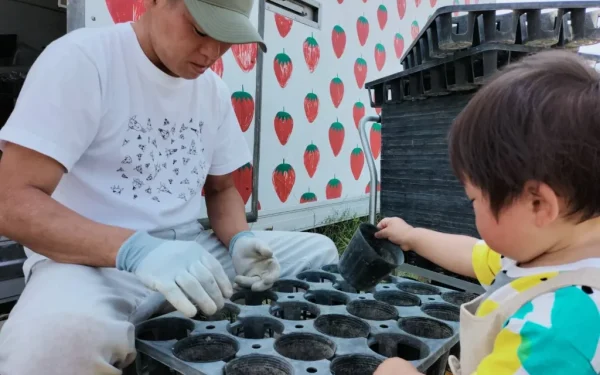
La Fraise Farm
Fukuoka
90-min all-you-can-eat strawberries: adults ¥2,000–3,000 (by season) / children ¥1,000 / age 4 and under free
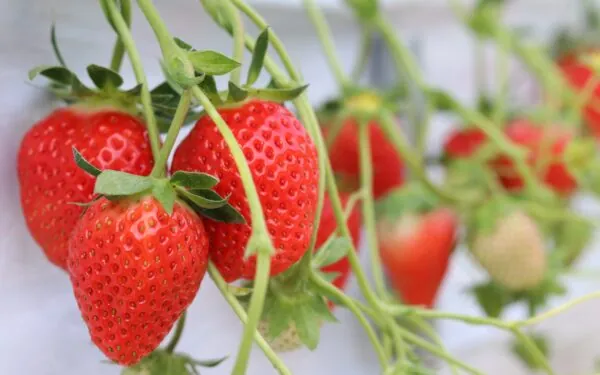
Hirai Farm
Fukuoka
45-minute all-you-can-eat (mixed hunting) from 3,300 yen for adults (varies depending on the season)
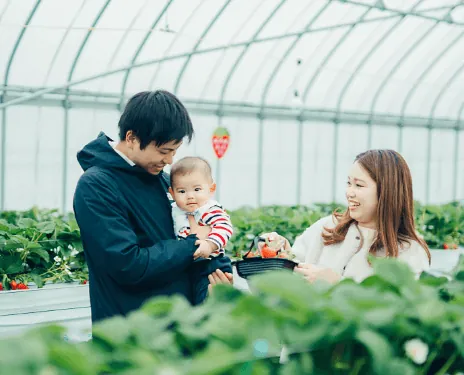
Fruitelier (Nakamura Orchard)
Fukuoka
Strawberry picking admission fee starts from 1,650 yen (plus 220 yen on weekends and holidays)
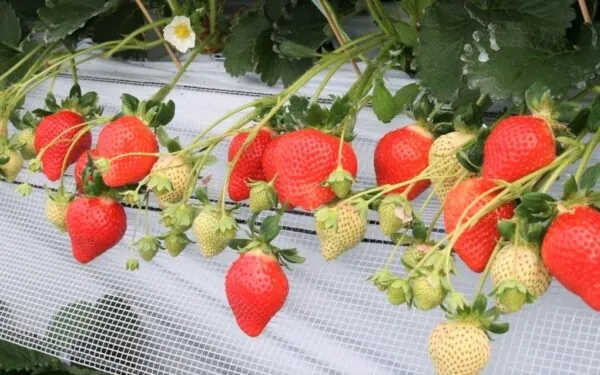
Pu-san's Strawberry Farm
Fukuoka
60-min all-you-can-eat: adults ¥2,500 / children 4+ ¥2,000 / under 4 free (Jan 3–May 6, 2026; cash only)

Lion Kajitsuen
Fukuoka
Adults (12 years and older) 2,600 yen, Children (3-11 years old) 2,000 yen (60 minutes all-you-can-eat, prices vary depending on the season)
🗺 Farm shops, fruit parlours and other Strawberry spots (105) on the map →
Next steps
Share this fruit
🍓 Amaou Strawberry — Find on Map
Discover nearby spots on our interactive map